Please note: I wrote this at 2am because I couldn't sleep. I will come back and edit more spelling/grammar later when I am more awake!
If you haven't already, you should read my post entitled I Hate Being in the Middle, which is about what it is like for me as a Metis person, being in the middle of conflicts in Canada between First Nations people and everyone else. In particular, I talk about the current discussion of the Idle No More Movement and Chief Theresa Spence.
In this post I want to talk about problems and solutions for First Nations people and the cycle of dependency. Now before anyone gets up in arms about that wording, I am referring to the book "Dances with Dependency" by First Nations author Calvin Helin. It is a non-fiction read about the problems in First Nations communities today and how to go about finding solutions to them. Helin presents his information in the style of a First Nations cyclical argument, which may be confusing to someone not properly sensitized to First Nations culture. I read this book in an Education course in University that was called Aboriginal Perspectives. There was maybe 3 people in the the room that appreciated the book for what it was and they were all First Nations or Metis. This is unfortunate, because it is actually a very good book. I won't lie; it is a difficult read. It presents a lot of facts in a relatively small space. Unfortunately, I don't have my copy of the book right in front of me as I write this as I am currently on a year long hiatus in Thailand. Forgive me for this if my memory fails me when it comes to any little details. From what I remember of how the book is set up, it has 3 sections, with many chapters in those sections. Each sections begins with First Nations storytelling/legends that tie all the sections together in the end. After that the chapters begin to discuss facts. The first section is about First Nations pre-history. That means before Europeans came to North America. The second section discusses all the things that happened after contact involving treaties, residential schools, etc. that led to the current cycle of dependency, the third section is about where we are now and how to change things to reach a solution. The trouble is getting through section 2 and into section 3. Section 2 is very long. Because it uses a cyclical argument style it may seem at first glance as though it is repeating things already said. Think of the cyclical argument as a snowball. It starts of small with the key points that are important to its composition. If you roll it more and more is added to these key points each time it goes around. It gets bigger and bigger until at last you reach the final layer where it has reached perfection. This outer layer is the one left exposed to the air, exhibiting the snowball in its perfect entirety. It will grow hard on this outer layer, which will help to keep the rest of the snowball fused together. So we start with the key points already. Each time we come back to them we add a bit more. The final layer in this case will be Section 3. This is where you will reach that "Aha!" moment where the whole book makes sense. Be patient, Section 2 is needed to make sense of Section 3, but it is going to tell you a lot of things in a short space and possibly things you will find hard to hear. It is all worth it in the end. If you don't want to read the book, or if you need more convincing, I will discuss it below. Keep in mind, I am not rewriting the book. You need to read it to get all the statistics and information I cannot fit in a blog post. All of what I write is based on the facts and statistics in Helin's book, except stories of my own experiences and things I learned in history books that I will use as further support for what I am saying.
According to the book "Dances with Dependency" by Calvin Helin these next few years are going to have to be about finding just that solution. There are so many factors involved. The truth is that the Canadian government can't afford to continue paying money to the first peoples as their population steadily grows while the rest of the population is in a steady decline.
The problem is we need the resources now of the extra bodies, just to keep our economy going. We need them out there doing jobs that will be of benefit to all Canadians.
There are many scars of history that will not be erased overnight. Some reserves are still without running water or proper medical centers. Many are isolated. The buildings people live in are often full of asbestos. Even if there is money they often can't get the supplies needed to their location to build new buildings and houses. For this reason large families are cramped into tiny asbestos-ridden houses to the point that they have to sleep or eat in shifts. Children if they go to school might be tired or hungry. That is assuming they can find a teacher who will stay in their community or have the housing/a building for a school available to them.
School is still a sore point too with the last residential school closing in 1996. Students abused at these schools lost their cultural identity and were estranged from their parents. The lack the parenting skills others might have because all that was modeled was abuse. Many also turned to alcohol or drugs to cope. Sending children from reserves to other schools results in culture shock and lower grades in many cases. All that is just the tip of the iceberg. So you should read Dances with Dependency for the full scope of things. What it does suggest though is if there is going to be meaningful change we need First Nations people to make a step towards trying to better themselves and moving beyond this cycle of dependency. However, that by itself won't be enough. Simultaneously, we need the government to do the same thing. Lastly, each and every Canadian needs be be willing to make the necessary changes.
Initially the cost may be higher. We need new houses and schools. Or we need to move First Nations into the community at least part of the year. If that happens it will require initial assisted living, help with job finding and skill building in adults, support for children in schools, cultural sensitivity courses for everyone else, and a lot of community support. In some parts of the country First Nations people are for the most part doing pretty well. They are more accepted by people in the community. Despite this, within these provinces there are still some isolated First Nations communities lacking resources like running water. I say this with the painful memories of moving from just such a province to the province of Manitoba, where things are quite different. I was shocked by the hostility and racism between First Nations and Caucasian people. This hostility and racism goes in both directions. I had never seen anything like it and it frightens and confuses me even now. I understand in part where it comes from, the scars of history are perhaps deepest in Manitoba, where so many conflicts occurred between First Nations, Metis, and Caucasian people (particularly the Canadian government). I understand that the residential schools are a huge problem that has become like an elephant in the room. I understand that the reserves are in many cases extremely isolated and not very pleasant places to live.
When I moved to Manitoba I thought I knew quite a bit about First Nations people. I had grown up on the stories of elders from the Northwest Coast Tribes. I had learned sash weaving, basket making, bannock making, and attended many First Nations and Metis gatherings. When I came to Manitoba I realized all of this was nothing compared to what I still needed to learn. It has been 4 years since then. I feel I am not an expert, and yet I am put in the position yet again of describing to you what it is like to be First Nations. It is the curse of being Metis. That said there are people who could tell you better if you'd sit down and listen to them for once and hold your tongue until they are done. They are the First Nations people themselves. What they can tell you I suspect you'll not like to hear, but you'll be better for it.
I want to tell you about what it is like to be a First Nations person living in a Caucasian community. Many don't graduate high school. They feel isolated and set apart and they are. Have you ever been in a classroom where a teacher suddenly asks a student, "Hey, [insert name here], you are First Nations, what do you think about [insert part of Canadian history here]?" as if one student could speak for all First Nations people even if you hadn't just humiliated them in from of their peers! Assuming they do manage to graduate high school despite this social stigma and any problems at home such as poverty, or any number of symptoms of the cycle of dependency, they might go on to post-secondary. People immediately will jump to drugs, alcohol, and crime. Did you know there is a higher number of First Nations people in penitentiaries than any other group in Canada? Often they are there are very light charges such as shoplifting or drug dealing. Why are we paying to have them locked away with murderers and rapists? Because the system doesn't know what to do with them. Are First Nations people dangerous? No more than any other group of people. Drugs, alcohol, and crime are just symptoms of a much larger and deeper problem. Back to post-secondary. What is it like to go to post-secondary when no one in your family ever has? What is it like when the First Nations community has a stigma towards education imposed on them by years of government abuse? What is it like when you are a minority on a campus dominated by Caucasian students and professors. "Oh nice to meet you. Are you here taking First Nations Studies?" Why would anyone assume they are here taking First Nations studies?! And again they are inevitably sitting in the back of one class or another when a professor comes up and says, "I don't mean to put you on the spot, but what do you think about [insert First Nations related material here]?" Post-secondary is a scary place. Most will drop out. Maybe they will feel guilty at becoming "better" than family members. I have heard that feeling expressed a lot. Maybe they are sick of being put on the spot. Maybe they are feeling isolated. Maybe it is a combination of factors.
If we want First Nations people in our school, post-secondary institutions, communities, and workforce we need to change the system from the bottom up. There need to be cultural sensitivity courses put in place for every Canadian, and mandatory ones. In the schools, in the workplaces, everywhere. What we are doing right now is asking them to change but not moving to change ourselves. That never works, not with anything. There must always be compromise. All parties must work towards a common goal. If we are not all on the same page we are just going to end up back where we started. It is frustrating to Caucasians that First Nations get all sorts of money and freebies and seem to be abusing them and throwing them away. They were set up to fail. The government in the past intentionally tried to destroy First Nations people. First they tried to eradicate them. I mean kill them off using smallpox infected blankets, and starving them. I mean putting them on reserves that were intentionally the worst pieces of land where they could not farm or hunt or live successfully even if they were given the adequate resources.When this tactic proved ineffective the government tried to destroy their culture and identities through residential schools. The cycle of dependency was created carefully and intentionally by the Canadian government to create make First Nations people unable to amalgamate and be "productive members of society" as people like to say these days. This was done because it was yet another attempt to cause the genocide of First Nations people. It would be very convenient if suddenly the government didn't have to pay money to First Nations people because there weren't any left. Unfortunately for the government First Nations people proved surprisingly resilient. This left us in a heck of a mess. The cycle of dependency makes First Nations people intentionally dependent, but that means the government has to keep sending them resources it doesn't have anymore. Whoops.
What is the solution? Patience. It is going to take a lot of patience to sort this out. Commitment. We need to commit to a long-term solution, not just a bandaid. Support. Everyone needs to be on the same page. Everyone in the country needs to work together to provide the resources needed to make a change. This problem is bigger than all of us. We need to have meetings in our communities, in our regions, in our provinces/territories, in Ottawa. Each step of the way must be carefully mapped. I don't know the solution in its entirety. It is bigger than me. It is bigger than Calvin Helin and his book. It is bigger than all of us. I know the first steps though. The first step is the willingness of all of us to change for the better. The second step is putting this change into action by implementing an education system that is better for every single Canadian regardless of social, cultural, and personal backgrounds. We must all take a step together towards a brighter future.
We all need to educate ourselves. It has nothing to do with whether we are Caucasian, First Nations, Metis, or any other group. The problem stems from the lack of understanding each other and our differences and how the affect the way we interact. I agree, a solution is needed, but we need to fully understand the problem to come to the solution. The solution won't be simple. It will involve many steps. All must be concisely laid out so they can be effective. We can't create the solution by ourselves. We must come together as a community to do it. We must have First Nations input. We must have government input. We must have input from Canadian communities across the country. We must leave our differences at the door and sit down together and discuss with just the goal of a long-term solution in mind. The solution must be as big as the problem. I don't have the necessary resources to compose it in its entirety. I know the first steps. 1. Everyone must step up to the plate and say, "Hey we all need to change." That means every single Canadian. Because as uncomfortable as it is, we are living on borrowed land. And no solution will be successful if the Canadian populace is not committed to it as well. 2. We must take immediate action in educating all parties in skills that will encourage positive future interactions and help First Nations students to successfully complete high school, and post secondary. 3. We need to figure out a better system of rehabilitation for petty crimes in Canada so First Nations people aren't unnecessarily sitting in penitentiaries eating up tax dollars and not providing skills to the Canadian economy. Not only would this rehabilitation process be helpful to First Nations people in the system, but to all Canadians... because not all criminals are First Nations people. 4. We need to figure out what to do about reserve lands and treaties. The government can't afford to pay out the monies owed as the result of unfulfilled treaties and broken promises. We need to come to a compromise. We need to also figure out how First Nations people can live more closely linked with other communities in Canada while not sacrificing their cultures and ways of life anymore. (This has happened too much already in our history.) We want them to still have access to their traditional, and treaty lands but be able to live closer to resources needed for clean water, building supplies, education, and medical care. If we achieve all this we will have a long-term solution. I fear it may take at least 7 generations though.
We need your voice too! Please put forth your own ideas. Now is the time for discussion. Now is the time to begin this change. We don't want this to have to fall to our children or their children when things will be further deteriorated. Our population can't sustain itself. We need our First Nations people now more than ever.
Friday, January 18, 2013

Thursday, January 17, 2013
I Hate Being in the Middle
This post is about Metis People and Canadian politics and racial discrimination.If you don't know what Metis people are go here first!
I saw this comment on a friend's Facebook wall the other day. "Took a cab home and got into a conversation with him about "Idle No More". Mentioned I was Metis, and was called a racist." There is more to this story too. Apparently, when he got out the driver wished him good luck in completing his university studies so he could become a productive member of society. Ummm excuse me? This friend is gainfully employed and has remained committed to the same job for 3 years (and that is just that I know of!) Sure he could have a better job, but that is the same for nearly any university student!
Now I want to tell a little story of my own. In my 3rd year of post-secondary I changed my post-secondary institution. I moved to a new town and ended up in the residence until I got settled in my new location. In the residence I was in a shared room with another girl and had a bathroom shared with 4 people. When my roommate moved in she hadn't even finished unpacking when she plopped down on her bed and looked at me, "I'm First Nations." I blinked.... okay. I didn't see why this mattered one way or the other in context. I replied with a nod and, "Yeah, I know. I'm Metis." (And it's true... I knew. Being Metis I recognized her facial features as similar to those of Metis people I had known growing up.) She stared at me and said nothing. In fact she never really spoke to me at all after that. She spent 2 weeks avoiding me entirely before moving out without warning. I was very confused... I started avoiding telling people I was Metis after that. It seems sometimes like it causes a social pandemic.
I am proud of my heritage, but in the grander social scheme, does it really matter what ethnicity anyone has? Especially in Canada and the USA where generations of foreign and aboriginal blood have mixed into one big muddy soup. Yes, I am Metis. You can be Metis up to an 1/8th or maybe a 1/16th in your lineage.I always forget which. The whole thing is confusing but I understand politically, economically, and legally why they have to draw the line. Anyways, I get looked at oddly when pronouncing I am Metis with ivory fair skin. The only tell tale sign, if you look closely, is the shape of my nose. But if you can be Metis with 1/8th lineage heck I could look East Indian, or Botswanian... or really anything... and still be Metis. Don't judge!
Strangely, that is not what bothers me most about being Metis. What I hate is being in the middle and both sides hating me just for my blood... my genetics! Metis throughout history have been the middlemen in First Nations-Caucasian relations in Canada. Here's the issue....
Situation 1: I walk in on a group of friends/coworkers/etc bashing First Nations people and step in to defend them. The group gets angry and defensive. I say, "Hey look, I'm Metis and in my experience First Nations people do [X] because of [Y]." I am greeted with "You don't look Metis." ... "Why are you siding with them?" ... "How do I know your Metis?" ... "So what, you get all sorts of freebies like they do?" ...etc. And sometimes ruins my relationship with said people.
Situation 2: I walk in to wherever... it doesn't really matter. For sake of argument we'll say a coffee shop. There is a First Nations person there. I ask them for a favor like "Could you hand me one of those napkins?" They respond with, "You think I'm lazy?! It's just because I'm First Nations isn't it?" I bite my tongue to avoid saying no it is just because you were closer and go for, "Hey sorry, I didn't mean to upset you. I'm Metis." Then I am greeted with "You don't look Metis." ... "Why do you Metis always think you are so great?" ... "I bet you are just saying that. You aren't Metis, are you?" ... "You just wish you were Native." ... "Yeah, whatever...."
Okay.... let me explain something. When I am saying "I am Metis" in these situations, what I actually mean is "Hey, we aren't that different. Can't everyone just get along... please?!" or "Look, I understand you are having a bad day. I have them too. I'd appreciate if you didn't take out your frustration on other people though."
Where is this all going? I want to talk about Chief Spence. It seems to be an unavoidable topic lately. Let me remind you "I am Metis." (Please refer back to the above paragraph if you forget what I mean by that at any time between now and the end of the post.)
I have been seeing a lot of ignorant posts on this topic lately on Facebook. I have also read a lot of ignorant news articles. Let me set it out for you neatly...
"Chief Spence hasn't really been on hunger strike like the media suggests..."
Okay, from what I have read she has been subsisting on liquids, mostly soup broth for sustenance. I read this in an article from January 11th:
"Spence, who has been consuming only water, medicinal teas and fish broth for 35 days, says Johnston" (Johnston being the Governor General of Canada.)
Read more: http://www.ottawacitizen.com/news/Chief+Theresa+Spence+steadfast+refusing+Idle+More+protest/7818844/story.html#ixzz2IEuHeNnz
Now, I don't know about you but I would be pretty darn sick and starving if I lived on only fish broth for 35+ days. I have been on an elimination diet before where you gradually over the course of a month eliminate things from your diet until eventually you are only drinking water for a day... then you gradually reintroduce these foods. I got so weak I had to reintroduce things early. I can't imagine the shock to your system if you suddenly go from full meals to just fish broth, and then sustain that for any length of time!
And yes, I suppose the media can be misleading. It has a bias, like anything else. It is just as well Chief Spence was consuming something or she would've been dead long before Harper ever decided to talk with her.
"Idle No More is a sham. The government shouldn't give Spence any more money!" or "They shouldn't meet with her."
Okay, there are a lot of things wrong with this. I agree they shouldn't give Chief Spence any more money. she obviously is terrible at money management and profiting off of reserve funds. Interestingly enough Stephen Harper seems to have similar money management skills when it comes to Canada. Maybe we shouldn't give him any more money either. The issue is people on Spence's reserve still need money. Some people have said not to give her anything until they can audit all reserves and account for money. The government does not have the time or resources to do that. Should it? Yes, probably, in the long run. Even better, set up on-reserve education in money managing.
The other issue is Idle No More and Spence's hunger strike don't directly have anything to do with money. It is a protest of Omnibus Bill C 45. This is a blanket bill that is the government's way of quickly passing a number of unrelated laws. Now the main ones that Spence is worried about are land and water (ie. environmental) legislature, and then a few laws that have to do with how the government and First Nations people interact. Since it's creation the Idle No More movement has grown to include people interested in changes in a lot of legislature covered in Bill C 45, but the focus has primarily been environmental laws. The concern has a lot to do with the pipeline being put through British Columbia to get petroleum products from the Alberta oil sands to the BC coast for shipping overseas. Citizens are concerned about environmental damage to fragile ecosystems, some of which also are part of reserve land.
So basically, yes... Spence is corrupt when it comes to money. Don't give her money. If her reserve needs money find some way to give it directly to the people who need it. That aside, she is not currently asking for money... she is asking for a meeting regarding Bill C 45. I think you should give it to her. I have concerns with some of that legislature too and I encourage other Canadians to read it carefully if you haven't. You will be shocked what is in there!
"We need to stop giving First Nations people/reserves money."
There are a lot of problems on reserves we don't even realize. Corrupt band leaders/chiefs are common. If you are interested in learning more about this you should read, "Dances with Dependency" by Calvin Helin. Don't let the First Nations style cyclical argument and storytelling method throw you off. It is full of important information and relevant statistics. There is no clear cut answer for this issue.
"Spence needs to go through the proper channels."
A. She has tried.... it wasn't getting her anywhere.
B. This is a time-sensitive issue with the pipeline in BC.
"Idle No More protesters have no right to block highways and other transportation routes."
I am pretty sure this has happened with protests throughout Canadian (and world) history. I know it is inconvenient, but I think that is the point.
I saw this comment on a friend's Facebook wall the other day. "Took a cab home and got into a conversation with him about "Idle No More". Mentioned I was Metis, and was called a racist." There is more to this story too. Apparently, when he got out the driver wished him good luck in completing his university studies so he could become a productive member of society. Ummm excuse me? This friend is gainfully employed and has remained committed to the same job for 3 years (and that is just that I know of!) Sure he could have a better job, but that is the same for nearly any university student!
Now I want to tell a little story of my own. In my 3rd year of post-secondary I changed my post-secondary institution. I moved to a new town and ended up in the residence until I got settled in my new location. In the residence I was in a shared room with another girl and had a bathroom shared with 4 people. When my roommate moved in she hadn't even finished unpacking when she plopped down on her bed and looked at me, "I'm First Nations." I blinked.... okay. I didn't see why this mattered one way or the other in context. I replied with a nod and, "Yeah, I know. I'm Metis." (And it's true... I knew. Being Metis I recognized her facial features as similar to those of Metis people I had known growing up.) She stared at me and said nothing. In fact she never really spoke to me at all after that. She spent 2 weeks avoiding me entirely before moving out without warning. I was very confused... I started avoiding telling people I was Metis after that. It seems sometimes like it causes a social pandemic.
I am proud of my heritage, but in the grander social scheme, does it really matter what ethnicity anyone has? Especially in Canada and the USA where generations of foreign and aboriginal blood have mixed into one big muddy soup. Yes, I am Metis. You can be Metis up to an 1/8th or maybe a 1/16th in your lineage.I always forget which. The whole thing is confusing but I understand politically, economically, and legally why they have to draw the line. Anyways, I get looked at oddly when pronouncing I am Metis with ivory fair skin. The only tell tale sign, if you look closely, is the shape of my nose. But if you can be Metis with 1/8th lineage heck I could look East Indian, or Botswanian... or really anything... and still be Metis. Don't judge!
Strangely, that is not what bothers me most about being Metis. What I hate is being in the middle and both sides hating me just for my blood... my genetics! Metis throughout history have been the middlemen in First Nations-Caucasian relations in Canada. Here's the issue....
Situation 1: I walk in on a group of friends/coworkers/etc bashing First Nations people and step in to defend them. The group gets angry and defensive. I say, "Hey look, I'm Metis and in my experience First Nations people do [X] because of [Y]." I am greeted with "You don't look Metis." ... "Why are you siding with them?" ... "How do I know your Metis?" ... "So what, you get all sorts of freebies like they do?" ...etc. And sometimes ruins my relationship with said people.
Situation 2: I walk in to wherever... it doesn't really matter. For sake of argument we'll say a coffee shop. There is a First Nations person there. I ask them for a favor like "Could you hand me one of those napkins?" They respond with, "You think I'm lazy?! It's just because I'm First Nations isn't it?" I bite my tongue to avoid saying no it is just because you were closer and go for, "Hey sorry, I didn't mean to upset you. I'm Metis." Then I am greeted with "You don't look Metis." ... "Why do you Metis always think you are so great?" ... "I bet you are just saying that. You aren't Metis, are you?" ... "You just wish you were Native." ... "Yeah, whatever...."
Okay.... let me explain something. When I am saying "I am Metis" in these situations, what I actually mean is "Hey, we aren't that different. Can't everyone just get along... please?!" or "Look, I understand you are having a bad day. I have them too. I'd appreciate if you didn't take out your frustration on other people though."
Where is this all going? I want to talk about Chief Spence. It seems to be an unavoidable topic lately. Let me remind you "I am Metis." (Please refer back to the above paragraph if you forget what I mean by that at any time between now and the end of the post.)
I have been seeing a lot of ignorant posts on this topic lately on Facebook. I have also read a lot of ignorant news articles. Let me set it out for you neatly...
"Chief Spence hasn't really been on hunger strike like the media suggests..."
Okay, from what I have read she has been subsisting on liquids, mostly soup broth for sustenance. I read this in an article from January 11th:
"Spence, who has been consuming only water, medicinal teas and fish broth for 35 days, says Johnston" (Johnston being the Governor General of Canada.)
Read more: http://www.ottawacitizen.com/news/Chief+Theresa+Spence+steadfast+refusing+Idle+More+protest/7818844/story.html#ixzz2IEuHeNnz
Now, I don't know about you but I would be pretty darn sick and starving if I lived on only fish broth for 35+ days. I have been on an elimination diet before where you gradually over the course of a month eliminate things from your diet until eventually you are only drinking water for a day... then you gradually reintroduce these foods. I got so weak I had to reintroduce things early. I can't imagine the shock to your system if you suddenly go from full meals to just fish broth, and then sustain that for any length of time!
And yes, I suppose the media can be misleading. It has a bias, like anything else. It is just as well Chief Spence was consuming something or she would've been dead long before Harper ever decided to talk with her.
"Idle No More is a sham. The government shouldn't give Spence any more money!" or "They shouldn't meet with her."
Okay, there are a lot of things wrong with this. I agree they shouldn't give Chief Spence any more money. she obviously is terrible at money management and profiting off of reserve funds. Interestingly enough Stephen Harper seems to have similar money management skills when it comes to Canada. Maybe we shouldn't give him any more money either. The issue is people on Spence's reserve still need money. Some people have said not to give her anything until they can audit all reserves and account for money. The government does not have the time or resources to do that. Should it? Yes, probably, in the long run. Even better, set up on-reserve education in money managing.
The other issue is Idle No More and Spence's hunger strike don't directly have anything to do with money. It is a protest of Omnibus Bill C 45. This is a blanket bill that is the government's way of quickly passing a number of unrelated laws. Now the main ones that Spence is worried about are land and water (ie. environmental) legislature, and then a few laws that have to do with how the government and First Nations people interact. Since it's creation the Idle No More movement has grown to include people interested in changes in a lot of legislature covered in Bill C 45, but the focus has primarily been environmental laws. The concern has a lot to do with the pipeline being put through British Columbia to get petroleum products from the Alberta oil sands to the BC coast for shipping overseas. Citizens are concerned about environmental damage to fragile ecosystems, some of which also are part of reserve land.
So basically, yes... Spence is corrupt when it comes to money. Don't give her money. If her reserve needs money find some way to give it directly to the people who need it. That aside, she is not currently asking for money... she is asking for a meeting regarding Bill C 45. I think you should give it to her. I have concerns with some of that legislature too and I encourage other Canadians to read it carefully if you haven't. You will be shocked what is in there!
"We need to stop giving First Nations people/reserves money."
There are a lot of problems on reserves we don't even realize. Corrupt band leaders/chiefs are common. If you are interested in learning more about this you should read, "Dances with Dependency" by Calvin Helin. Don't let the First Nations style cyclical argument and storytelling method throw you off. It is full of important information and relevant statistics. There is no clear cut answer for this issue.
"Spence needs to go through the proper channels."
A. She has tried.... it wasn't getting her anywhere.
B. This is a time-sensitive issue with the pipeline in BC.
"Idle No More protesters have no right to block highways and other transportation routes."
I am pretty sure this has happened with protests throughout Canadian (and world) history. I know it is inconvenient, but I think that is the point.
Tuesday, October 23, 2012
Today the World!
I was reminded today of how when we were going to high school our teachers kept telling us that it was our generation that would change the world. It seemed like a daunting task at the time. In the years directly following high school it seemed nothing short of impossible. Today I woke up to check my Facebook before work and saw a birthday notification for my friend Sara, who is working for a non-profit in Africa. She is turning 23 today! I was reminded just how many of us under the age of 25 (and even more under the age of 30) are really changing the world, just like we were told we would!
That's all for now... I'm off to change the world!!!
That's all for now... I'm off to change the world!!!
Sunday, October 21, 2012
How Silence Will Kill Canada
I don't often
express my political or religious views on the internet, but there comes a
point in politics when something needs to be said. There comes a point when
silence is more harmful than polarizing yourself. When it comes to politics in
general I like to think I fall somewhere into the moderate zone within the
Canadian political spectrum. Maybe I am a bit to the left, but Canadian
politics tends to center a bit more to the left than the USA for example.
Right now we have a Conservative Prime Minister, Mr. Stephen Harper. Would I vote for the Conservative Party? Maybe. I look at a number of factors before determining who I will vote for. I look at who the party leader is and what they stand for. I look at who the local MP would be and what they stand for, and what they have done to contribute to the community. I look at the Party Platform. I read the newspaper, listen to the radio, and watch the TV to see what is being said. I try to attend at least one forum in the community. I look at what each party has to say about specific topics that I think are important. Then I make the best choice. So if I felt voting Conservative was the best choice, then yes, I would vote Conservative. Would I vote Conservative right now? No. Nothing is more appalling than the Harper Government. (And it is called the Harper Government, not the Canadian Government, even by members of the Conservative Party.)
Each time I read a news story about what Harper has most recently brought to the table, I get visions of marching Nazis. This is no exaggeration. Adolf Hitler was well liked when he first came to power in Germany, but then he went off the deep end and people were afraid to oppose him because of what would happen to them if they did. I see this sort of thing starting to happen in Canada already. Harper was popular... popular enough to win a majority government after 2 terms of Prime Minister in a minority. Since the last election however, his supporters have dropped drastically because they see that what is happening now is not what they had envisioned. That is because he is taking away the rights of citizens at every turn. He is ignoring environmental concerns and the rights of indigenous peoples. He is doing his best to quell protesters or discredit them. He is selling land and resource rights to the highest bidder (i.e. China) ... and all of this is happening behind closed doors. We, as Canadians, should all be terribly afraid, but we must also speak our minds about what is happening. If we don't speak now, we may find that later on it is too late. We may lose that right or also find ourselves discredited. Silence is no longer an option. We have 3 more years with Harper at the helm. Most importantly we need to remember his current deeds when the next election comes around. No doubt he will do his best to make us happier closer to Election Day or use more slander campaigns against his opponents. Remember the things that are happening now when you next go to the polling station. I for one am terrified at the very thought of another term of the Harper Government!
Part of our problem in the political scene right now is the lack of inspiring leaders. I'll be honest with you that in the last election I would've voted for Duceppe of the Bloc Quebecois, if I had lived in Quebec. He was the most inspiring of all party leaders in that election. (As unfortunate as that is to say.) Don't get me wrong, Layton was inspiring... but I knew deep down that he was not going to be the party leader much longer. Something just seemed wrong. Ignatieff rubbed me the wrong way as well, and while Mr. Rae is slightly more inspiring, he has a long way to go! Elizabeth May had some excellent things to say, and was second most inspiring after Duceppe, but the truth is Canada is just not ready for the Green Party to be in charge. The Green Party isn't ready for the Green Party to be in charge either. So since having the Green Party or the Bloc in power is not something that is likely to be a reality now or in the near future we must look to the Conservatives, Liberals, and NDPs. None of them have very inspiring leaders. What I want to urge right now is that both Mr. Rae and Mr. Mulcair really put themselves out there. Voice your opinions. Don't try to be that guy that everyone likes. Canadians need someone with a clear ideology, someone inspiring. If you are playing it safe then Harper could well get another term. I know, I know you don't want to lose supporters, but you can't gain any either if we don't know what you stand for! To Mr. Mulcair in particular... I will not vote for you because I don't know what you stand for. You may not be an amazing orator, but your opinions are important so speak up! Unless you stick your neck out and make some powerful statements about some of the issues you are just as guilty of killing Canada as Mr. Harper. Speak now, because Canadians are ready to listen!
Silence is not something that any of us can afford.
Right now we have a Conservative Prime Minister, Mr. Stephen Harper. Would I vote for the Conservative Party? Maybe. I look at a number of factors before determining who I will vote for. I look at who the party leader is and what they stand for. I look at who the local MP would be and what they stand for, and what they have done to contribute to the community. I look at the Party Platform. I read the newspaper, listen to the radio, and watch the TV to see what is being said. I try to attend at least one forum in the community. I look at what each party has to say about specific topics that I think are important. Then I make the best choice. So if I felt voting Conservative was the best choice, then yes, I would vote Conservative. Would I vote Conservative right now? No. Nothing is more appalling than the Harper Government. (And it is called the Harper Government, not the Canadian Government, even by members of the Conservative Party.)
Each time I read a news story about what Harper has most recently brought to the table, I get visions of marching Nazis. This is no exaggeration. Adolf Hitler was well liked when he first came to power in Germany, but then he went off the deep end and people were afraid to oppose him because of what would happen to them if they did. I see this sort of thing starting to happen in Canada already. Harper was popular... popular enough to win a majority government after 2 terms of Prime Minister in a minority. Since the last election however, his supporters have dropped drastically because they see that what is happening now is not what they had envisioned. That is because he is taking away the rights of citizens at every turn. He is ignoring environmental concerns and the rights of indigenous peoples. He is doing his best to quell protesters or discredit them. He is selling land and resource rights to the highest bidder (i.e. China) ... and all of this is happening behind closed doors. We, as Canadians, should all be terribly afraid, but we must also speak our minds about what is happening. If we don't speak now, we may find that later on it is too late. We may lose that right or also find ourselves discredited. Silence is no longer an option. We have 3 more years with Harper at the helm. Most importantly we need to remember his current deeds when the next election comes around. No doubt he will do his best to make us happier closer to Election Day or use more slander campaigns against his opponents. Remember the things that are happening now when you next go to the polling station. I for one am terrified at the very thought of another term of the Harper Government!
Part of our problem in the political scene right now is the lack of inspiring leaders. I'll be honest with you that in the last election I would've voted for Duceppe of the Bloc Quebecois, if I had lived in Quebec. He was the most inspiring of all party leaders in that election. (As unfortunate as that is to say.) Don't get me wrong, Layton was inspiring... but I knew deep down that he was not going to be the party leader much longer. Something just seemed wrong. Ignatieff rubbed me the wrong way as well, and while Mr. Rae is slightly more inspiring, he has a long way to go! Elizabeth May had some excellent things to say, and was second most inspiring after Duceppe, but the truth is Canada is just not ready for the Green Party to be in charge. The Green Party isn't ready for the Green Party to be in charge either. So since having the Green Party or the Bloc in power is not something that is likely to be a reality now or in the near future we must look to the Conservatives, Liberals, and NDPs. None of them have very inspiring leaders. What I want to urge right now is that both Mr. Rae and Mr. Mulcair really put themselves out there. Voice your opinions. Don't try to be that guy that everyone likes. Canadians need someone with a clear ideology, someone inspiring. If you are playing it safe then Harper could well get another term. I know, I know you don't want to lose supporters, but you can't gain any either if we don't know what you stand for! To Mr. Mulcair in particular... I will not vote for you because I don't know what you stand for. You may not be an amazing orator, but your opinions are important so speak up! Unless you stick your neck out and make some powerful statements about some of the issues you are just as guilty of killing Canada as Mr. Harper. Speak now, because Canadians are ready to listen!
Silence is not something that any of us can afford.
Monday, October 8, 2012
A Lesson in Fact Checking
In the wake of the American elections there have been a slew of political posts. Some of them are good. Some are bad. Some are really ignorant. I admit, everyone has the right to their views. I will keep mine out of this because it is an American election, not a Canadian election. However, I would like to point out the importance of checking your facts before posting a political message. Just today this message appeared on my Facebook stream:

Right away my brain was going, "Well what about peaceful Christian countries? Are there any of those?" And because I wasn't sure I checked my facts!
Here is some of the data from the 2012 Global Peace Index:
Note Qatar, a country that according to the CIA World Factbook is 77.5% Muslim. Where is the United States? I scrolled down, and down, and down and then I saw it:
Not only was the United States number 88 on the list but you should see some of the countries that have a better peace ranking than it. (Some are Muslim countries, but others are just... well... surprising!) Take a look!
There were also a ton of very poor African countries, but this was just a taste!
So for the list of peaceful Muslim countries? You might want to add:
1. Qatar
2. United Arab Emirates
3. Kuwait
4. Oman
Especially if you are comparing them to the USA. I was curious still... how do these countries compare to the USA in other ways?
I went to aneki.com and did their country comparison for Qatar and the USA:
So you will see, if you check your facts it would stop a lot of the hate and prevent a lot of wars between countries around the world. When it comes down to it the facts show we are not that different!

Right away my brain was going, "Well what about peaceful Christian countries? Are there any of those?" And because I wasn't sure I checked my facts!
Here is some of the data from the 2012 Global Peace Index:
Country
|
2012 GPI rank
|
Iceland
|
1
|
Denmark
|
2
|
New Zealand
|
2
|
Canada
|
4
|
Japan
|
5
|
Austria
|
6
|
Ireland
|
6
|
Slovenia
|
8
|
Finland
|
9
|
Switzerland
|
10
|
Belgium
|
11
|
Qatar
|
12
|
Czech Republic
|
13
|
Sweden
|
14
|
Germany
|
15
|
Note Qatar, a country that according to the CIA World Factbook is 77.5% Muslim. Where is the United States? I scrolled down, and down, and down and then I saw it:
United States
|
88
|
Not only was the United States number 88 on the list but you should see some of the countries that have a better peace ranking than it. (Some are Muslim countries, but others are just... well... surprising!) Take a look!
Korea, South
|
42
|
United Arab Emirates
|
46
|
Kuwait
|
47
|
Oman
|
59
|
Serbia
|
64
|
Bosnia and Herzegovina
|
65
|
Cuba
|
70
|
There were also a ton of very poor African countries, but this was just a taste!
So for the list of peaceful Muslim countries? You might want to add:
1. Qatar
2. United Arab Emirates
3. Kuwait
4. Oman
Especially if you are comparing them to the USA. I was curious still... how do these countries compare to the USA in other ways?
I went to aneki.com and did their country comparison for Qatar and the USA:
| Country | |
 Qatar |  United States |
| Leader | |
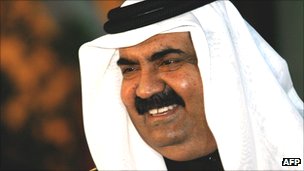 Emir: Sheikh Hamad bin Khalifah Al Thani |  President: Barack Obama |
| Population | |
| 1,951,591 | 313,847,465 |
| Life Expectancy | |
| 78.090 years | 78.490 years |
| Human Development Index | |
| 0.899 | 0.95 |
| GDP per capita | |
| $104,300 US | $49,000 US |
| Literacy Rate | |
| 89% | 99% |
| Corruption Perception Index | |
| 6.5 | 7.3 |
| Percentage of Women in Parliament | |
| 0% | 16.6% |
| Unemployment Rate | |
| 0.400% | 9.000% |
| Death Penalty | |
| Legal | Legal |
| Political System | |
| emirate | Constitution-based federal republic; strong democratic tradition |
| Religions | |
| Muslim 77.5%, Christian 8.5%, other 14% (2004 census) | Protestant 51.3%, Roman Catholic 23.9%, Mormon 1.7%, other Christian 1.6%, Jewish 1.7%, Buddhist 0.7%, Muslim 0.6%, other or unspecified 2.5%, unaffiliated 12.1%, none 4% (2007 est.) |
| Languages | |
| Arabic (official), English commonly used as a second language | English 82.1%, Spanish 10.7%, other Indo-European 3.8%, Asian and Pacific island 2.7%, other 0.7% (2000 census) note: Hawaiian is an official language in the state of Hawaii |
| Exports | |
| liquefied natural gas (LNG), petroleum products, fertilizers, steel | agricultural products (soybeans, fruit, corn) 9.2%, industrial supplies (organic chemicals) 26.8%, capital goods (transistors, aircraft, motor vehicle parts, computers, telecommunications equipment) 49.0%, consumer goods (automobiles, medicines) 15.0% (2003) |
| External Debt | |
| $125,300,000,000 $ | $14,710,000,000,000 US |
| Exchange Rate | |
| Qatari rials (QAR) per US dollar - 3.64 (2008 est.), 3.64 (2007), 3.64 (2006), 3.64 (2005), 3.64 (2004) | |
| Military Budget as percentage of GDP | |
| 10.000% | 4.060% |
| Location | |
| Middle East, peninsula bordering the Persian Gulf and Saudi Arabia | North America, bordering both the North Atlantic Ocean and the North Pacific Ocean, between Canada and Mexico |
I also compared the USA and Oman for good measure:
| Country | |
| United States |  Oman |
| Leader | |
President: Barack Obama |  Sultan, prime minister, foreign minister: Qaboos Bin Said Al Said |
| Population | |
| 313,847,465 | 3,090,150 |
| Life Expectancy | |
| 78.490 years | 74.470 years |
| Human Development Index | |
| 0.95 | 0.839 |
| GDP per capita | |
| $49,000 US | $26,900 US |
| Literacy Rate | |
| 99% | 81.4% |
| Corruption Perception Index | |
| 7.3 | 5.5 |
| Percentage of Women in Parliament | |
| 16.6% | 9.1% |
| Unemployment Rate | |
| 9.000% | 15.000% |
| Death Penalty | |
| Legal | Legal |
| Political System | |
| Constitution-based federal republic; strong democratic tradition | monarchy |
| Religions | |
| Protestant 51.3%, Roman Catholic 23.9%, Mormon 1.7%, other Christian 1.6%, Jewish 1.7%, Buddhist 0.7%, Muslim 0.6%, other or unspecified 2.5%, unaffiliated 12.1%, none 4% (2007 est.) | Ibadhi Muslim 75%, other (includes Sunni Muslim, Shi'a Muslim, Hindu) 25% |
| Languages | |
| English 82.1%, Spanish 10.7%, other Indo-European 3.8%, Asian and Pacific island 2.7%, other 0.7% (2000 census) note: Hawaiian is an official language in the state of Hawaii | Arabic (official), English, Baluchi, Urdu, Indian dialects |
| Exports | |
| agricultural products (soybeans, fruit, corn) 9.2%, industrial supplies (organic chemicals) 26.8%, capital goods (transistors, aircraft, motor vehicle parts, computers, telecommunications equipment) 49.0%, consumer goods (automobiles, medicines) 15.0% (2003) | petroleum, reexports, fish, metals, textiles |
| External Debt | |
| $14,710,000,000,000 $ | $9,054,000,000 US |
| Exchange Rate | |
| Omani rials (OMR) per US dollar - 0.3845 (2008 est.), 0.3845 (2007), 0.3845 (2006), 0.3845 (2005), 0.3845 (2004) | |
| Military Budget as percentage of GDP | |
| 4.060% | 11.400% |
| Location | |
| North America, bordering both the North Atlantic Ocean and the North Pacific Ocean, between Canada and Mexico | Middle East, bordering the Arabian Sea, Gulf of Oman, and Persian Gulf, between Yemen and UAE |
So you will see, if you check your facts it would stop a lot of the hate and prevent a lot of wars between countries around the world. When it comes down to it the facts show we are not that different!
Monday, September 24, 2012
My Moon Over Eggy
No, that doesn't mean I'm PMSing! Moon Over Eggy is another name for Eggy in a Basket or Eggy in a Blanket.


In this case I was attempting to make this:

What I actually made was this:


I have a few theories of why, and some tips for anyone who wants to try themselves.
1.Capsicum (bell peppers) are very expensive in Thailand so I made the slices thin to make more egg flowers. Thicker slices would be more ideal to containing the egg. Alternatively, a smaller sized egg.
2. My griddle has bumps in it. A flat surface would work better.
3. I had seen tomato put in the bottom to prevent leaks out the bottom. This only perpetuated the problem with the capsicum slices being too thin.
4. Thai eggs are free-range. As a result they have a thick shell but very soft yolks that often lose their shape. I guess you can't have everything!
5. I cooked the bell peppers a bit before adding the egg to prevent the bottom from leaking. This seemed quite effective. It was over flowing that was the problem.
Luckily, I am resourceful and saved dinner:

Subscribe to:
Posts (Atom)


